
How Your Hormonal Cycles Change Your Hair and How to Sync Your Routine
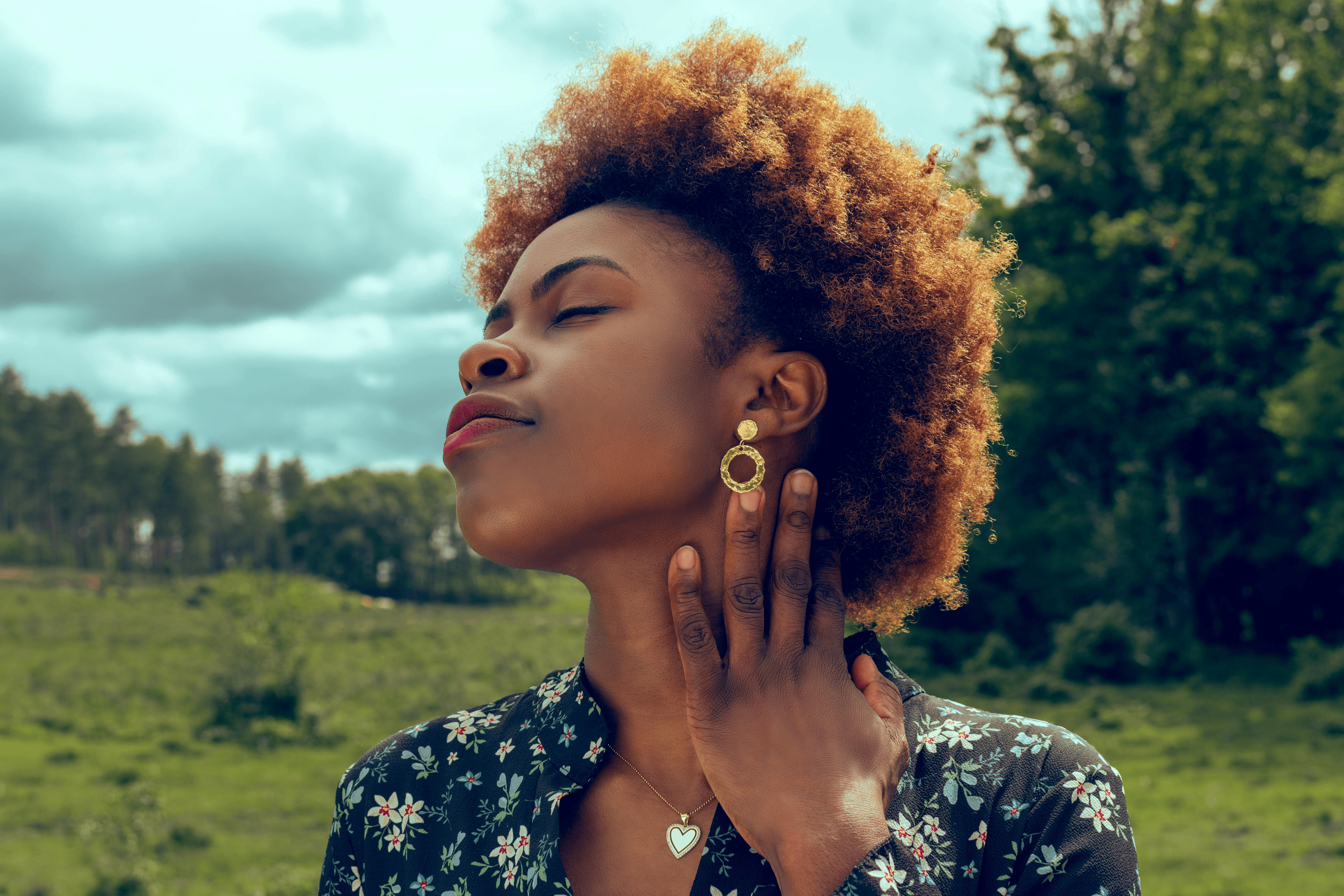
Have you ever had a week where your hair simply refuses to cooperate, despite you doing everything exactly the same as the week before?
One Tuesday, your curls are popping, defined, and reflecting light like a disco ball. Fast forward ten days, and suddenly those same coils feel like parched straw...limp, frizzy, or seemingly shedding if you so much as look at them. You haven't changed your products. You haven't changed your technique. You’re left wondering if you’ve somehow lost your "hair touch" or if your hair has simply decided to go on strike.

Here is the truth: Your hair isn't gaslighting you; it’s being biological. The same hormonal fluctuations that dictate your mood, your skin’s clarity, and your energy levels are also the silent conductors of your hair’s behavior. Whether it’s the shift in your monthly menstrual cycle, the major transition of postpartum, or the gradual change of perimenopause, your hormones are reflected in the strength of your strands and the health of your scalp.
Understanding this connection is the ultimate glow-up. It moves you away from the frustration of "fixing" random problems and toward a lifestyle of cycle syncing (working with your body’s natural rhythms to ensure your textured hair stays thriving through every stage of life).

The Silent Conductors: Meet the Hormones Running the Show
To master your hair, you first have to understand the players. Your scalp is one of the most metabolically active parts of your body, meaning it reacts quickly to the chemical messages your brain and ovaries are sending. To understand how these cycles affect your hair, we have to look at the three-part growth cycle: Anagen (growth), Catagen (transition), and Telogen (resting/shedding).
Estrogen (The Hair Hero): This is the hormone responsible for the "glow." It extends the Anagen phase, keeping strands on your head longer and encouraging the production of collagen. When estrogen is high, your hair feels thicker and looks shinier.
Progesterone (The Sebum Regulator): Progesterone helps regulate your cycle, but it also stimulates sebum (oil) production. When it’s in balance, your scalp feels supple. When it spikes or crashes, you might deal with either excessive oiliness or sudden, unexplained dryness.
Testosterone (The Oil Trigger): While often labeled a "male" hormone, women have it too. A small spike in testosterone during your cycle can lead to an increase in scalp oils, which can lead to clogged follicles or "flat" roots in textured hair.
Cortisol (The Stress Saboteur): When life gets hectic, cortisol rises. High cortisol can prematurely push hair into the Telogen phase, leading to increased shedding during particularly stressful months.

The Monthly Rhythm: Navigating Your Menstrual Cycle
Your hair undergoes subtle changes every 28 to 31 days. By matching your hair care to these four phases, you can stop fighting your texture and start supporting it.
Phase 1: Menstruation (The Days of Deep Rest)
Timeline: Days 1–5
When your period begins, your estrogen and progesterone levels are at their lowest point. Your body is working hard to shed its lining, and your overall inflammatory markers are often higher than usual.
What is happening to your hair?
During this phase, your scalp may feel incredibly sensitive. Because estrogen (which helps maintain the skin barrier) is low, your scalp might feel itchy or even "sore" at the roots. You might also notice a slight increase in shedding. Because your natural oil production is low, textured hair, which already struggles with oil distribution due to its curl pattern...can feel particularly brittle.
What to do:
- Prioritize Scalp Soothing: This is not the time for aggressive scrubbing or high-tension styles.
- The Èyí Dára Touch: Use our Moisturizing Shampoo Bar. It’s formulated with aloe and soothing botanicals that cleanse away buildup without agitating a sensitive scalp.
- Low Manipulation: Let your hair breathe. Opt for loose styles that don't pull on the sensitive follicles while your body recalibrates.
Phase 2: The Follicular Phase (The Glow Up)
Timeline: Days 6–14
As your period ends, estrogen begins its steady climb. This is the "feel-good" phase of your cycle. You’re likely feeling more creative, social, and energetic.
What is happening to your hair?
This is your "Prime Hair Week." Rising estrogen levels boost blood flow to the scalp and stimulate the growth phase. Your hair will likely feel its strongest and most resilient. For those with textured hair, you’ll notice better definition and a natural sheen that doesn't require heavy oils to achieve.
What to do:
- Max Out the Moisture: Since your hair is at its most receptive, this is the perfect time to "bank" moisture for the drier weeks ahead.
- The Èyí Dára Touch: Apply the Deep Conditioning Mask. Because your strands are in a peak growth state, they will soak up the strengthening proteins and hydrating butters more effectively.
- Experiment: Want to try a new intricate twist-out or a sleek look? Do it now. Your hair is in its most cooperative mood.

Phase 3: Ovulation (The Balancing Act)
Timeline: Days 14–16
This is a short but powerful window. Estrogen peaks, but you also get a brief spike in testosterone.
What is happening to your hair?
The testosterone spike can cause your sebaceous glands to go into overdrive. You might notice your roots getting "greasy" or "heavy" faster than usual, even if your ends still feel dry. For the curly community, this often looks like lost volume at the crown or "limp" curls.
What to do:
- Focus on the Roots: You don't necessarily need a full wash, but a light scalp refresh can help.
- The Èyí Dára Touch: Keep your ends protected with our Nourishing Leave-In. It contains Tucumã butter, which provides a moisture barrier that keeps the mid-lengths hydrated while you manage the oilier roots.
Phase 4: The Luteal Phase (The Moisture Crisis)
Timeline: Days 17–28
This is the longest and often most frustrating phase. Progesterone rises and then, right before your period, everything (estrogen and progesterone alike) plummets.
What is happening to your hair?
Welcome to "The Great Drying." As estrogen drops, your hair loses its ability to retain moisture. This is when frizz feels uncontrollable and your curls might feel "crunchy." This drop in hormones also triggers PMS-related stress, which can make your hair look dull.
What to do:
- The Layering Method: You need to be intentional with hydration. Use the Liquid-Cream-Oil method to seal every drop of moisture into the hair shaft.
- The Èyí Dára Touch: Our Nourishing Leave-In is your best friend this week. Apply it more frequently than you did in Week 2. Focus on the ends of your hair, which are the oldest and most susceptible to this hormonal drought.
Major Life Cycles: Postpartum and Beyond
While the monthly cycle is a steady rhythm, life brings major "waves" that completely transform our hair needs.
Postpartum: The Great Shed
During pregnancy, high estrogen keeps hair in the growth phase. You feel like a goddess with the thickest hair of your life because you aren't shedding at a normal rate. Then, around 3–6 months after birth, those levels crash. This is Telogen Effluvium...when all that "saved up" hair enters the shedding phase at once.
How to care:
- Be Patient: This is a physiological transition, not a failure of your routine. It usually normalizes within a year.
- Minimize Friction: Use a silk scarf or bonnet religiously during this time.
- The Èyí Dára Touch: Use our Deep Conditioning Mask to ensure the hair that is staying has maximum elasticity. High slip is crucial now to prevent tangles that could pull out shedding hair prematurely.

Perimenopause and Menopause: The Slow Shift
In your 40s and 50s, estrogen begins a permanent decline. This can lead to a shorter growth phase (hair doesn't grow as long), a loosening of the curl pattern, and significantly drier strands.
How to care:
- Scalp Health is Key: A healthy scalp environment can help maximize the hair your follicles are producing.
- Seal, Seal, Seal: Because the scalp produces less oil, you must manually provide that protection.
- The Èyí Dára Touch: Our Wash Day System is designed for longevity. Cleanse, condition and curl you strands with our products to keep your hair softer and healthier.

The Lifestyle Cycle: Stress and Cortisol
Even if your menstrual or life cycles are regular, chronic stress can override your progress. High cortisol levels act as a "stop" sign for hair growth. If you are constantly in "fight or flight" mode, your body diverts nutrients away from your hair and toward your vital organs.
The Ritual of Care:
We encourage you to view your wash day as a nervous system reset. The act of massaging your scalp and taking time for yourself lowers cortisol. When your stress goes down, your hair’s potential goes up.
Your Cycle-Syncing Summary
Menstrual
- Primary hormone shift: Low Estrogen/Progesterone
- Hair experience: Sensitive scalp, brittle ends
- Your power move: Gentle cleansing, low tension
Follicular
- Primary hormone shift: Rising Estrogen
- Hair experience: Peak shine, resilient curls
- Your power move: Deep condition, try new styles
Ovulation
- Primary hormone shift: Testosterone Spike
- Hair experience: Oily roots, lost volume
- Your power move: Scalp massage, light leave-in
Luteal
- Primary hormone shift: Crashing Hormones
- Hair experience: Extreme dryness, frizz
- Your power move: Heavy hydration, frequent sealing
Postpartum
- Primary hormone shift: Estrogen Crash
- Hair experience: Sudden, heavy shedding
- Your power move: High-slip products, patience
Menopause
- Primary hormone shift: Permanent Estrogen Drop
- Hair experience: Thinning, texture changes
- Your power move: Scalp care, consistent moisture

Honoring Your Body’s Wisdom
Your hair is a living record of what is happening inside your body. By understanding these hormonal shifts, you take the guesswork out of your beauty routine. You stop fighting against a "bad hair day" and start providing exactly what your body is asking for...whether that’s a deep soak in a mask or a week of low-tension rest.
At Èyí Dára, we don't just create products; we create tools for you to honor your natural rhythm. Your hair is an extension of your wellness. When you care for the body, the hair follows.

Comments