
5 Gentle Habits To Unlock Your Fullest Edges
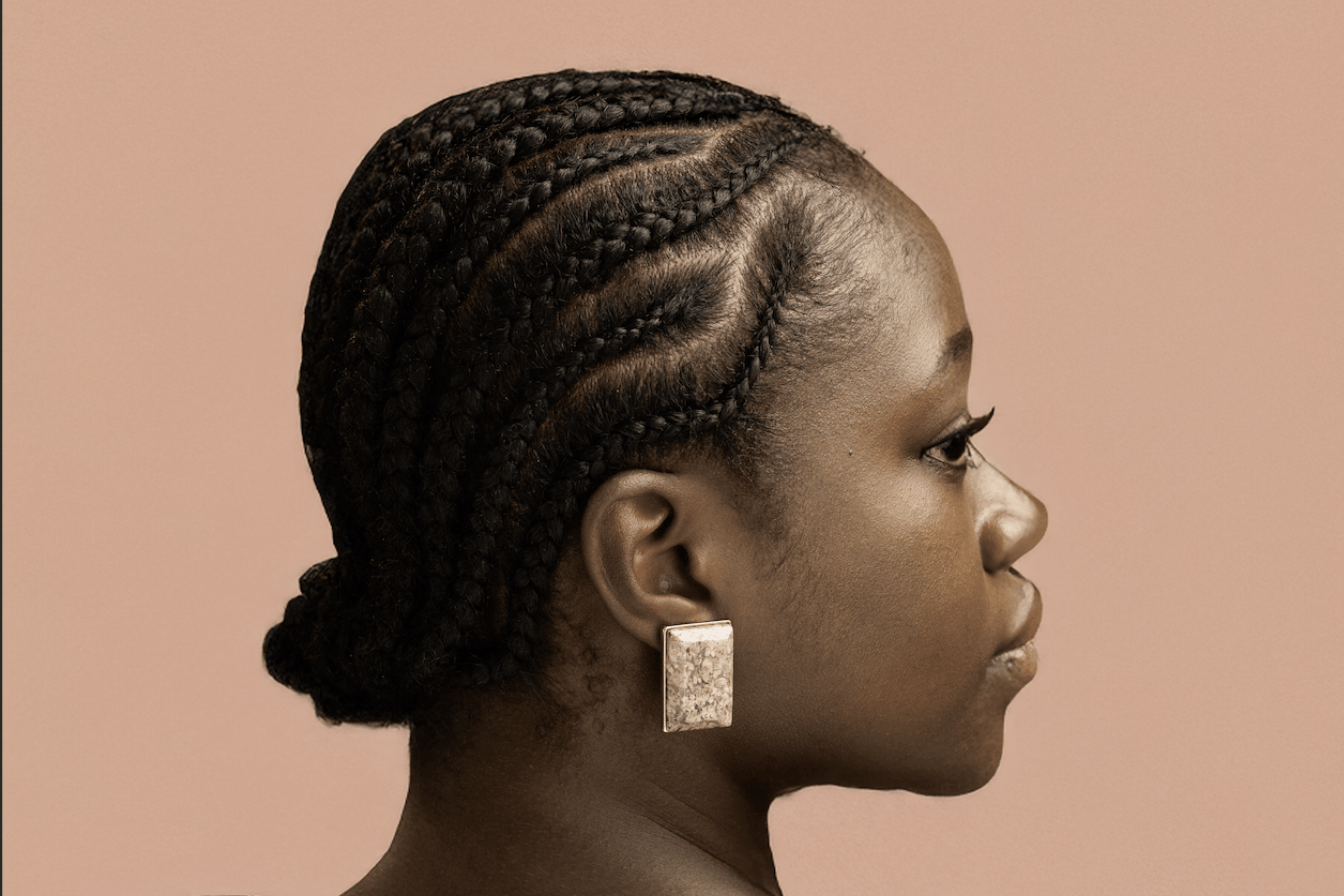
If you’ve ever leaned into the bathroom mirror, tilted your head, and felt a small pit in within, you are not alone. Maybe you noticed your hairline starting a little further back than it used to, or perhaps the baby hairs that once framed your face feel sparse and fragile. It’s a quiet realization: “My edges weren’t looking like this before.”
In the world of textured hair, our edges are often the first to tell us when something is wrong. They are the "canaries in the coal mine" for our hair health. Honestly, thinning rarely happens overnight; it’s usually a slow whisper, a softer hairline here, a style that feels a bit too snug there. Because textured hair thrives on specific care, it also responds quickly to tension and neglect.

However, fuller edges don’t come from "doing the most." You don’t need a miracle "edge-grower" or a 10-step clinical regimen. You need a return to gentleness. At Èyí Dára, we believe that hair care is an act of self-kindness. When you adjust your routine to honor the fragility of your hairline, your hair responds in kind.
In this guide, we’re breaking down five transformative, gentle habits that help your hairline recover, thrive, and finally reach its full potential.
Understanding Why Your “Edges” Are So Fragile
Before we dive into the habits, we have to look at the "why."
Why do our edges thin while the rest of our hair seems fine? Your hairline is biologically different from the hair at the crown or the nape of your neck.
- Shorter Growth Cycles: Technically known as the anagen phase, the growth period for the hair around your hairline is naturally shorter. This means these hairs don’t have as much time to grow long or thick before they naturally shed and restart the cycle.
- Finer Diameter: The individual strands at your perimeter are typically finer and have a thinner cuticle layer, making them more susceptible to mechanical damage and moisture loss.
- High Exposure: Your edges face the world first. They take the brunt of face washes, makeup application, headbands, glasses, and weather.
Because of these factors, the foundation of a full hairline isn't intensity, it's protection and patience.
Habit 1: Master the Art of Low-Tension Styling
We often use the term "protective styling," but if a style is pulling on your follicles, it isn’t protecting anything; it’s performing a slow extraction. High-tension braids, tight "slick-back" buns, and heavy extensions put immense pressure on the hair follicle.
When a follicle is under constant tension, it becomes inflamed. This inflammation can lead to Traction Alopecia, a condition where the hair is literally pulled out at the root. If this happens repeatedly, the follicle can become scarred and stop producing hair altogether.
How to Practice Gentle Styling:
-
The "One-Day" Rule: If your braids or ponytail feel tight or give you a headache on day one, they are too tight. Period. Do not wait for them to "loosen up."
-
Leave the "Baby Hairs" Alone: Ask your stylist to leave the finest hairs at your perimeter out of the braids or twists. These hairs are too weak to anchor a heavy extension.
-
The "Gap" Test: When wearing a ponytail or bun, you should be able to slide a finger comfortably under the hair tie. If you can't, it’s pulling too hard on your edges.
Pro tip: switch your "slick-back" routine from a hard-hold gel to a moisturizing cream. You might not get that "plastic" finish, but you’ll keep your hair.

Habit 2: Upgrade Your Nighttime "Edge Guard"
Friction is the silent enemy of a full hairline. While you sleep, a standard cotton pillowcase acts like a sponge, soaking up the natural oils your scalp produces. Worse, the rough fibers of cotton create friction every time you toss and turn, leading to snapping and thinning.
The Silk Solution:
Switching to silk or satin isn't just a luxury; it’s a necessity for textured hair. However, the way you wear your protection matters just as much as the material.
When wearing your silk, ensure your bonnet or scarf sits behind your hairline, or right at the very edge of it. If the elastic band of your bonnet sits directly on your edges all night, the constant rubbing can lead to a "receding" look.
Looking for the perfect silk to shop? Our ÈyÍ Dára Silk Scarf is designed to be soft and breathable, ensuring that your edges stay covered without being crushed.

Habit 3: Prioritize "Micro-Moisturizing"
Because of the curl pattern of textured hair, sebum (your scalp’s natural oil) has a hard time traveling down the hair shaft. Your edges, being at the very "front lines," tend to dry out significantly faster than the rest of your head. When hair is dry, it loses its elasticity and snaps like a dry twig.
Gentle reminder:
Don't wait for "Wash Day" to hydrate your edges. Practice "Micro-Moisturizing", applying a tiny amount of moisture every two to three days.
The Èyí Dára Approach:
Use a lightweight leave-in like our Nourishing Leave-In Conditioner.
- Lightly mist your edges with a little water or a rosewater spray.
- Apply a pea-sized amount of the Nourishing Leave-In.
- Smooth it in with the pads of your fingers (never your nails).
This keeps the hair fibers flexible. Flexible hair bends; dry hair breaks. By keeping your edges hydrated, you ensure that the length you do grow stays on your head instead of ending up on your sink.

Habit 4: Implement "Rest Weeks" and Gentle Cleansing
One of the biggest mistakes we make is jumping from one install to the next without giving the scalp a chance to breathe. Your follicles need "down-time" to recover from the weight of styles.
The "Rest Week" Protocol:
Between every major style (like braids or a weave), give your hair 7–10 days of complete rest. During this time:
- No extensions.
- No heavy gels.
- No tight elastics.
- Focus purely on scalp health and deep conditioning.
Cleansing Without Stripping:
When you do wash your hair, remember that your edges are the most vulnerable to harsh surfactants. Many shampoos use sulfates that strip away the "acid mantle," the protective layer of your scalp.
Our Èyí Dára Moisturizing Shampoo Bar is formulated to cleanse the scalp deeply while leaving the hair's natural lipids intact. When washing your edges, use the "pads of your fingers" technique. Aggressive scrubbing at the hairline can cause mechanical thinning. Treat your hairline like you would treat fine lace with extreme care.

Habit 5: Stimulate Growth with Low-Pressure Massage
Blood flow is the delivery system for the nutrients your hair needs to grow. Since the hairline is often the site of tension, blood flow can sometimes be restricted in that area.
A gentle, warm oil massage is a powerful habit to "wake up" the follicles. However, the keyword here is gentle. We aren't trying to "scrub" the hair back into existence; we are simply encouraging circulation.
The 2-Minute Ritual:
- Warm a small amount of a lightweight oil (like Jojoba or Grapeseed oil).
- Apply it to your fingertips.
- Using circular motions, gently massage your hairline for two minutes.
- Do this 2–3 times a week before bed.
This practice doesn't just help with growth; it also softens any "stiff" follicles that have been hardened by product buildup or tension. It’s a moment of mindfulness for you and a boost of nutrition for your hair.

The "Less is More" Philosophy
It is tempting to think that "more product" equals "more growth." In reality, layering heavy edge controls, waxes, and gels every day creates a thick barrier of buildup. This buildup can suffocate the follicle and prevent moisture from entering the hair shaft.
If you must use edge control for a special occasion, make sure to wipe it off with a damp cloth at the end of the day. Don't let product sit on those fragile strands for days on end. Your edges don't need to be "laid" to be beautiful; they need to be healthy to be full.

A Note on Internal Wellness
We cannot talk about hair without talking about the body. Your edges often respond to internal stress before the rest of your body does. High levels of cortisol (the stress hormone) can push hair follicles into a resting phase, leading to shedding.
Support your "Gentle Habits" with:
- Hydration: Drink enough water to keep your skin and scalp supple.
- Nutrition: Focus on Omega-3 fatty acids, Zinc, and Iron, which are the building blocks of strong hair.
- Rest: Your body does its best repair work while you sleep.

Finally, You Are in Control of Your Hair Journey
The journey to fuller edges is not a sprint; it’s a series of small, intentional choices. By choosing gentleness over tension, moisture over dryness, and patience over "quick fixes," you are giving your hair the environment it needs to thrive.
At Èyí Dára, we create products that honor the unique needs of textured hair because we know that when you feel good about your hair, you feel empowered in your skin. Your edges are a part of your story, let’s make sure that story is one of health and strength.



Comments